


What Is Filter Coffee? How It’s Brewed and Why It’s Great
Quick summary
- Filter coffee is made by letting hot water drip through ground coffee and a filter. Gravity does the work, not pressure.
- It tastes clean, bright and sweet, so you can pick out what makes each coffee different.
- The main types are pour over (like the V60), batch brew, AeroPress and the plunger.
- Start with 15g of medium-ground coffee to 250g of water at around 94°C.
- Best coffee: a filter roast, which is roasted lighter than espresso to bring out sweetness and fruit.
Filter coffee is how I drink most of my coffee at home. It's simple, it's cheap to get into, and it lets you taste a coffee the way the farmer and the roaster intended. In this guide I'll explain what filter coffee is, how it's brewed, the main types, and how to make a great cup at home.
QUICK ANSWER
What is filter coffee?
Filter coffee is coffee brewed by pouring hot water over ground coffee in a paper or metal filter, and letting gravity pull it through slowly rather than forcing it with pressure like espresso. The result is a clean, light cup that shows off a coffee's sweetness and origin flavours. Popular ways to brew it include the V60, batch brew, AeroPress and plunger.
In this guide
- How filter coffee is brewed
- What is a filter roast?
- Types of filter coffee
- How to make filter coffee at home
- Common filter coffee mistakes
- Can you add milk to filter coffee?
- Filter coffee vs espresso
- Quick take: filter coffee pros and cons
- Final Thoughts
How filter coffee is brewed
Filter coffee, sometimes called filtered coffee, is brewed by passing hot water slowly through ground coffee and a filter. The filter holds back the grounds and lets the coffee through.
Espresso uses a machine to push water through the coffee under pressure. Filter brewing just uses gravity. That slower, gentler extraction gives you a cleaner cup with more clarity, so the sweetness and origin character of the coffee come through.
This guide covers filter coffee specifically. For every brewing method in one place, see our complete guide to making coffee at home.
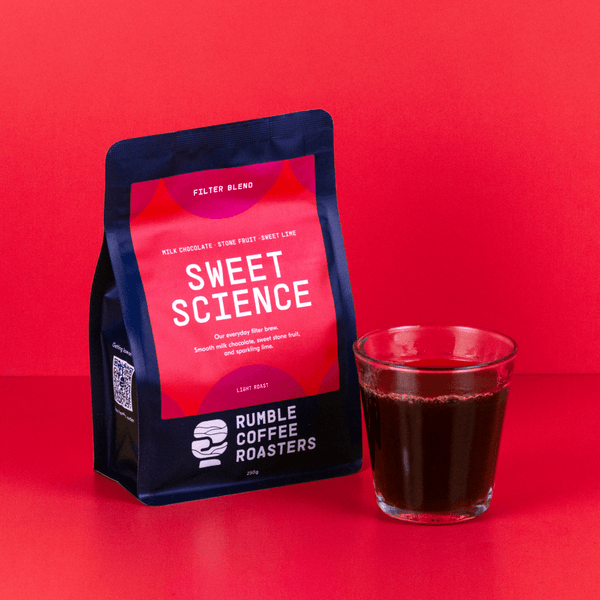
If you want to try it, Sweet Science Filter Blend is our everyday filter coffee. To go a step further, the Single Origin Filter Twin Pack gives you two single origins to brew side by side, so you can taste how much origin changes the cup.

What is a filter roast?

You'll often see coffees labelled filter roast or espresso roast.
A filter roast is roasted lighter. It spends less time in the roaster, so it keeps more of its natural acidity, sweetness and fruit. Those flavours really shine when the coffee is brewed gently through a paper filter.
An espresso roast is taken a little darker. That builds body and softens the acidity, so the coffee can stand up to pressure and cut through milk.
In short:
- Filter roast: for clarity, sweetness and a lighter cup.
- Espresso roast: for intensity and coffee with milk.
All our filter coffee beans are roasted for exactly this, from Sweet Science to seasonal single origins that change through the year.
Types of filter coffee
There are a few main ways to make filter coffee. Each one gives a slightly different cup.
1. Pour over (V60, Kalita, Chemex)

You pour hot water slowly over coffee in a cone lined with a paper filter. The Hario V60 is the classic.
What you'll taste: clean, bright coffee with lively acidity and floral notes.
For the full method, see our V60 pour over guide.
2. Batch brew and drip coffee machines
An automatic brewer heats the water and showers it over the coffee for you, so you can make a litre or more at once. It's how most specialty cafés serve filter coffee.
What you'll taste: smooth, sweet coffee that's consistent every time. Great for offices and the breakfast table.
The Moccamaster Select is our favourite. Our Moccamaster brew guide has the ratios, and our guide to batch brew coffee explains how cafés use it.
3. AeroPress

The AeroPress steeps the coffee, then you press it through a paper filter. It's compact, tough and a favourite with our team for travel.
What you'll taste: sweet, syrupy and low in bitterness.
Our AeroPress brew guide has a simple recipe.
4. Plunger
A coffee plunger (or French press) steeps the coffee in water, then a metal mesh filter holds back the grounds. It isn't quite the same as paper-filtered coffee, but it makes a heavier cup that works well with a dash of milk.
What you'll taste: rich and full, with more oils and texture.
Our plunger brew guide covers the method.
5. Clever Dripper and hybrid brewers
Brewers like the Clever Dripper steep the coffee first, then release it through a paper filter. They're forgiving and easy to repeat.
What you'll taste: smooth, balanced coffee with plenty of sweetness.
How to make filter coffee at home

You don't need an expensive machine. With fresh coffee, decent water and the right grind, you can make café-quality filter coffee at home.
You'll need:
- Fresh coffee, like Sweet Science Filter Blend
- A burr grinder (or pre-ground coffee for filter)
- A filter brewer, such as a V60, AeroPress or batch brewer
- Paper filters
- Scales and a timer
- Hot water at around 94°C (boil the kettle and let it sit for 45 seconds)
Method:
- Grind 15g of coffee to a medium grind, a bit like white sugar.
- Rinse the paper filter with hot water and tip the water out.
- Add the coffee and give it a gentle shake to level it.
- Pour about 45g of water to wet all the grounds and wait 30–45 seconds.
- Slowly pour the rest in circles until you reach 250g.
- Let it drain completely. It should take around 2.5 to 3 minutes all up.
- Give it a swirl and enjoy.
Tip: water makes up most of your cup. If your tap water tastes strongly of minerals or chlorine, filtered water will make a noticeably cleaner coffee.
Common filter coffee mistakes

- Grind too fine or water too hot: the coffee over-extracts and tastes bitter and dry.
- Grind too coarse or water too cool: the coffee under-extracts and tastes weak or sour.
- Old coffee: stale beans make a flat, lifeless cup. Filter brewing shows up stale coffee more than espresso does.
- Unrinsed filters or a dirty brewer: both add papery or musty flavours.
Can you add milk to filter coffee?
Of course. It's your coffee. I'd always try a new coffee black first, because that's where filter coffee really shines, but a splash of milk is completely fine.
A few things I've learnt:
- You don't need to heat the milk. The coffee is hot enough.
- Oat milk works well. Soy has a habit of curdling in filter coffee, especially lighter roasts.
- If you always take milk, a plunger gives a fuller cup that holds up better.
- If you want a really chocolatey, milky cup, try brewing one of our espresso roasts as filter. It's heavier and less fruity, but it suits milk.
Filter coffee vs espresso
| Brew method | How it's brewed | Texture | Flavour | Best for |
|---|---|---|---|---|
| Filter coffee | Gravity, through a filter | Light and clean | Bright, nuanced and origin-driven | Black coffee and tasting |
| Espresso | Pressure, through a machine | Thick and intense | Bold and concentrated | Milk coffees |
In short: filter coffee lets you taste the bean, while espresso is about strength and texture. If that's more your style, see our espresso brew guide. A stovetop sits somewhere in between: stronger than filter, without needing an espresso machine.
Quick take: filter coffee pros and cons
Pros
- Clean, sweet cups that show off each coffee's character
- Cheap and easy to get started
- Easy to adjust grind, ratio and temperature to suit your taste
- Scales from one cup to a full batch
Cons
- Lighter body than espresso, so it's less punchy with milk
- Shows up stale coffee and a poor grind
- Pour over takes a little practice to get consistent
Final Thoughts
In summary, filter coffee is the simplest way to taste the real character of a coffee. Hot water and gravity do the work, and a lighter filter roast gives you the sweetness and clarity that espresso can't. The biggest thing to remember is that fresh coffee, the right grind and clean water matter more than the gear.
All our filter coffees are roasted fresh in Melbourne and shipped Australia-wide. Start with Sweet Science Filter Blend, explore the full range of filter roasts, or set up a Filter Roast Subscription so fresh coffee keeps arriving.
Frequently Asked Questions
What is a filter roast coffee?
What’s the best grind size for filter coffee?
Why does my filter coffee taste papery or dull?
Is filter coffee the same as filtered coffee?
Is filtered coffee healthier than espresso?
Does filter coffee have more caffeine than espresso?
