


How to Make Perfect Coffee at Home
Quick summary:
-
Freshness and good coffee matters more than any technique. Buy whole beans, from a local specialty coffee roaster, grind fresh, and use them within 2–6 weeks of roasting
-
Match your grind size to your brew method: fine for espresso and stovetop, medium for filter coffee (like V60/Pour Over) and coarse for immersion (French press)
-
Weigh your coffee and water rather than eyeballing it. It's the fastest route to consistent results
-
Water quality and temperature matter more than most people assume
-
There's no single "best" method. Just the one that suits how you want to drink your coffee
Ever wonder why coffee from your favourite coffee shop tastes better than what you make at home, even using the same beans? It's a question we get asked all the time at our espresso bar in Kensington.
It usually comes down to a handful of details, not raw skill: they're grinding fresh for every single cup, weighing everything to a precise recipe, and using equipment that's dialled in and used constantly. They might have a more expensive espresso machine but brewing coffee is something you can always get better at.
I've had literally hundreds of people tell me how much better their coffee got the moment they bought a proper grinder and started grinding fresh at home.
The perfect cup isn't out of reach at home. It just takes knowing which variables actually matter to go from decent to genuinely great coffee — and that's exactly what I want to walk you through here: buy the right beans, grind them properly, get your ratios right, and avoid the handful of mistakes that trip most people up. In short, everything you need to brew better coffee at home, starting with your next cup.
QUICK ANSWER
How Do You Make Perfect Coffee at Home?
Great coffee at home starts with good coffee beans — specifically fresh, well-sourced beans from a local specialty roaster — ground right before you brew. From there, it comes down to matching your grind size to your brewing method, weighing your coffee and water rather than eyeballing it, and using the right ratio for whichever method you're using, whether that's espresso, a V60, AeroPress or French press. Get those fundamentals right, and the machine or method you use matters far less than most people assume.
Buy Fresh Coffee First
Before anything else — grind size, ratios, technique — the single biggest factor in your cup is the quality of your coffee.
The quality of the green coffee — the raw, unroasted coffee bean, before any roasting happens — sets the ceiling on how good your coffee can ever be. No amount of freshness or technique turns cheap, low-grade green coffee into something genuinely great.
We don't hide behind the generic term "specialty coffee" the way most roasters do. We started publishing exactly what we pay for every coffee we roast back in 2018 — an attempt to cut through the noise and spin around specialty coffee sourcing and just tell the truth — see our transparency reports for the full picture.
Freshness is what determines whether that potential actually shows up in your cup. Coffee starts losing flavour within weeks of roasting, and pre-ground coffee loses it within minutes — the moment coffee is ground, its surface area explodes and it starts going stale almost immediately.
Where you buy your coffee affects both. A local specialty roaster sells through small batches quickly, (the only realistic way to get coffee that's genuinely fresh) and pays more for better-graded, traceable green coffee in the first place. Supermarket coffee, by contrast, is often mass-roasted from lower-grade beans and sits in warehouses and on shelves for months, no matter what the "best before" date implies.
That's why the single best thing you can do to improve your coffee, more than any technique in this guide, is buy a coffee grinder and grind your beans right before you brew. Buy whole beans, not ground. Look for a roast date on the bag, not a vague "best before." And buy only as much as you'll get through in two to three weeks. Coffee isn't wine, it doesn't improve with age. We roast to order and ship fresh; browse our coffee beans or set up a subscription so fresh coffee just turns up when you need it.
Grind Size
Grind size is the second-biggest lever you have, and it changes depending on how you're brewing. As a rule: the faster water passes through your coffee, the coarser the grind needs to be. Espresso coffee — where water's forced through in under 30 seconds — needs a fine grind. Filter methods like V60 sit in the middle with a medium grind. Immersion methods like French press, where coffee sits in contact with water for several minutes, need a coarse grind so it doesn't over-extract.
Get the grind wrong for your method and no amount of technique will save the cup — too fine for a French press turns bitter and muddy; too coarse for an espresso runs thin and sour. If you're using pre-ground coffee, you're locked into whatever grind it came in, which is exactly why I tell people a decent grinder is the single best upgrade they can make. A burr grinder, not a blade grinder, is non-negotiable here, blade grinders chop unevenly and heat the coffee as they go, while burr grinders crush it to a consistent size every time.
The grinder I recommend most often is the Porlex Mini — it's cheap, portable, and super easy to use, which makes it the easiest first upgrade for most people. My own first proper grinder was a Breville Smart Grinder, and I ran it happily for ten years before recently upgrading to a Fellow Ode.
See our grinder guide for what to look for.
Water
Water makes up over 98% of your cup, so water temperature matters more than people assume. Use filtered water if your tap water has a strong taste — chlorine or heavy minerals will come through in the final cup. One thing I tell everyone who asks: avoid pouring straight from boiling water for delicate methods like V60 or AeroPress; let it sit for 30–45 seconds first, since water that's too hot can scald the coffee and pull out harsh, bitter flavours. Water that's too cold has the opposite problem — it under-extracts, leaving your coffee tasting flat and weak. For espresso, this is handled automatically by the machine.
Ratios
Ratio — how much coffee you use relative to water — is what separates a strong, punchy cup from a weak, watery one, and it varies by method:
-
Filter (V60, AeroPress, batch brew): around 1:15 to 1:17, coffee to water
-
Immersion (French press): closer to 1:15
-
Espresso: roughly 1:2 — for every gram of ground coffee (the dose), aim for double that in liquid espresso (the yield) — see our espresso guide for the full breakdown
Weighing your coffee and water on a cheap coffee scale, rather than eyeballing it, is the single easiest habit to pick up if you want your coffee to taste the same two days running.
You don't have to start from scratch either — most specialty roasters, us included, publish a recommended recipe on each coffee's product page, so you've got a real starting point rather than guessing.
My own advice to anyone starting out with espresso: stick to 1:2. Start there, taste it, and build from that baseline once you know what you like — you don't need to overthink it before you've even pulled a shot.
Common Mistakes
A handful of mistakes account for most bad home coffee - these are the ones I see most:
-
Using stale beans or pre-ground coffee — ground coffee starts going stale within minutes, so buy whole beans and grind fresh.
-
Wrong grind for your method— too fine turns immersion brews bitter, too coarse leaves espresso thin and sour. Remember that each brewing method has a specific grind.
-
Eyeballing instead of weighing — small errors in dose compound fast.
-
Water too hot or too cold — scalds delicate methods, under-extracts if too cool.
-
Dirty equipment — old coffee oils turn rancid and taint every brew after.
If I had to pick one, it's pre-grinding coffee for people. It's our least favourite thing to do as roasters, because we know it's nearly impossible to get right — the moment it's ground, the clock starts, and no method or grind size saves it after the fact.
If you're troubleshooting a specific issue, our espresso troubleshooting guide and general brew troubleshooting guide go deeper into fixes for each one.
Choosing Your Brewing Method
There's no single "best" brewing method — only the one that fits how you actually want to drink your coffee. I brew differently depending on the morning, and who I'm making coffee for, and here's how I think about the options:
-
Want convenience, no gear required? Drip bags are pre-portioned — just add hot water.
-
Want maximum control over flavour, one cup at a time? A Hario V60 rewards precision — paper filter, gooseneck kettle, and a slow, deliberate pour — and gives the cleanest, most nuanced single-cup coffee going. The classic expression of filter coffee.
-
Want something forgiving and hard to mess up? AeroPress is fast, portable, and consistently good.
-
Want a fuller-bodied cup for sharing? French press (plunger) brews strong, full-bodied coffee in bulk and works well black or with milk.
-
Want something strong and simple, no filters needed? A stovetop moka pot brews thick, concentrated coffee right on the stove — closer to espresso than filter, without the machine.
-
Want to batch brew a big pot with minimal fuss? A Moccamaster (or similar batch brewer) makes filter coffee in volume, consistently, with almost no technique required.
-
Want café-style coffee, with or without milk? That's espresso — hot water forced through at high pressure, different equipment, different technique, and its own set of variables.
-
Want something to make ahead and keep in the fridge? Cold brew — coffee steeped in cold water for 12+ hours — is naturally sweet, low in acidity, and ready whenever you are.
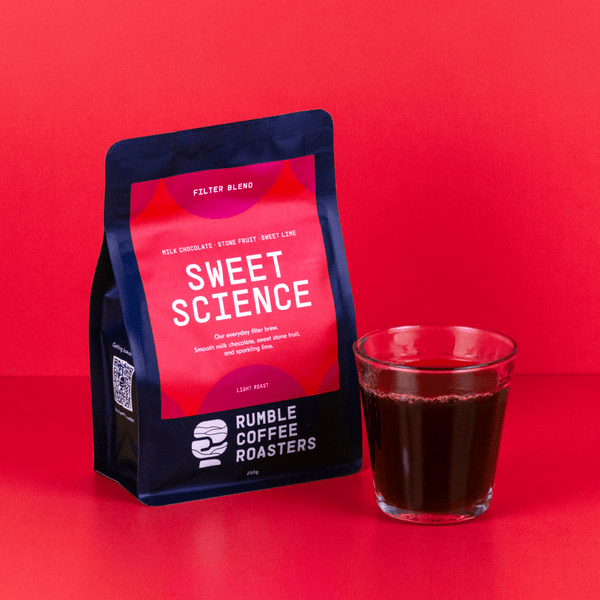
My own morning go-to is an AeroPress with our Sweet Science filter blend, before the rest of the house wakes up. It's fast, it's quiet, and it's hard to get wrong even half-asleep.
Whichever you land on, we've got a full step-by-step guide for it:
Not sure yet? Take our quick quiz to find your match, or just start with whichever equipment you already have, the fundamentals apply no matter which you pick.
If there's one thing to take from all of this, it's what I tell everyone who asks: buy a decent grinder and use it before anything else. Everything after that is just refinement.
Frequently Asked Questions
Does a dark roast mean stronger coffee?
How do I make my coffee stronger?
Which roast should I use for my brewing method?
What's your strongest coffee?
What's your favourite coffee?
